DOP: Draw One Part
- 4.4
- Rating
- 100.00M
- Installs
- Free
- Price

 Analysis by App-foxy
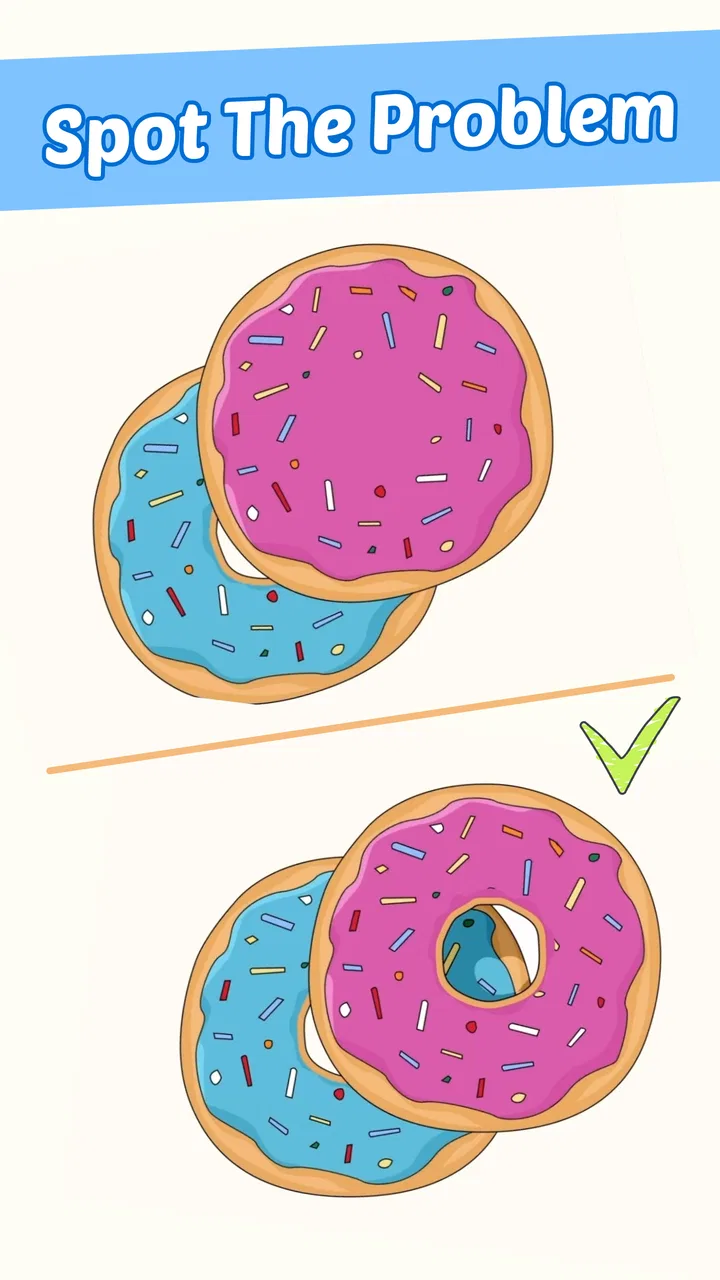
I spent time with DOP: Draw One Part, a casual puzzle game from SayGames Ltd that asks you to complete pictures by drawing the missing piece. Its central idea is easy to understand, but the appeal comes from looking at an image carefully, guessing what the scene is trying to show, and making a small mark that changes the whole puzzle. It is the sort of game I can open for a quick mental break without needing a long tutorial or a complicated control scheme.
That simplicity is also the main thing to understand before downloading it. This is not a deep logic simulator or a traditional drawing app. It is a light, visual brain teaser built around observation, interpretation, and a little experimentation. Some puzzles reward a precise answer, while others encourage me to think about the missing object in a playful way. When the intended solution clicks, the result feels satisfying. When it does not, the experience can become more about guessing than reasoning.
How the game feels in everyday use
The basic interaction is direct: I look at a scene, identify what seems incomplete, and draw the missing part on the screen. That makes the game approachable for people who do not usually play puzzle games. There are no complicated buttons to memorize, and the drawing gesture is much less intimidating than the premise might suggest. You are not being judged as an artist; you are trying to communicate the object or detail the puzzle expects.
You May Also Like

 AccuWeather: Weather Radar
AccuWeather Review: A Quick, Clear Forecast for Everyday Decisions
For everyday plans, the best forecast is the one you can understand quickly. AccuWeather makes rain timing, radar, and local conditions easy to act on, with a few trade-offs.

 Hill Climb Racing
Why Hill Climb Racing Still Turns Crashes Into One More Run
A tiny car, a bumpy hill and one more upgrade: Hill Climb Racing keeps resurfacing because its simple chaos makes every near-miss feel personal.

 AliExpress - Shopping App
AliExpress Makes Global Shopping Feel Personal, but Shoppers Bear the Risk
AliExpress turns a global marketplace into a pocket-sized discovery engine. Its reach is useful, its shopping loop compelling, and its trade-offs easy to miss.

 Lords Mobile: Kingdom Wars
Lords Mobile Is a Kingdom-Building Routine, Not a Quick Match
A case-by-case verdict on the building, battles, device demands, and social commitments that make Lords Mobile rewarding for some players and exhausting for others.

 PDF Scanner app - TapScanner
TapScanner Makes Paperwork Easier to Capture, Check, and Share
TapScanner makes scanning with a phone feel less like a rescue operation and more like a dependable step in getting work done. Its capture tools are useful, though not flawless.

 Block Blast!
 Shows How Much a Puzzle Game Can Leave Out
A quiet grid game shows why puzzle players increasingly value instant clarity, repeatable skill and low-pressure play—and where the genre still needs to catch up.
More From Our News Desk
View All News


I found the best way to play is to pause before drawing. The obvious gap is not always the answer. A picture may seem to need a physical object, but the missing part can instead be a detail that explains the situation. Looking at the entire scene rather than focusing only on the blank area helps prevent random scribbling. This small habit makes the game feel more like visual reasoning and less like trial and error.
The game works particularly well in short sessions. I could play a few puzzles while waiting for an appointment, during a commute, or between other tasks without needing to remember a complicated storyline. That makes it different from larger puzzle adventures, where progress often depends on committing more time. Here, the low barrier to entry is a genuine strength.
There is also a useful distinction between drawing skill and puzzle skill. Someone who is comfortable sketching may not automatically solve the levels faster, because the challenge is usually recognizing the intended idea. Conversely, a player with poor drawing confidence can still do well by making a simple, recognizable mark. I appreciated that the game turns drawing into a reasoning tool instead of making artistic quality the main test.
What makes the puzzles satisfying
The strongest moments come from visual reframing. I might initially read a scene one way, then notice a small clue that suggests the missing part should serve a different purpose. That kind of change in perspective is more rewarding than simply filling a clearly marked outline. It gives the puzzles a small “aha” moment without requiring advanced knowledge.
A practical tip is to inspect characters, objects, and the surrounding environment in that order. The character often reveals the action or problem, the nearby objects suggest possible solutions, and the background can explain why a particular detail matters. This approach is more reliable than drawing immediately in the largest empty space.
Another useful habit is to keep the first attempt simple. If I draw too much, I can accidentally obscure the clue or create a shape that the game does not recognize as intended. A short line, basic curve, or compact object is often a better starting point than an elaborate sketch. The game’s premise sounds artistic, but restraint is frequently more useful than detail.
That said, the satisfaction depends heavily on whether the expected answer feels fair. When the scene provides enough visual information, solving it feels clever. When the intended interpretation is too specific, the puzzle can feel opaque, especially if I already understand the situation but cannot reproduce the exact missing element. This is an important trade-off: the same open-ended drawing mechanic that creates surprise can also create uncertainty.
Cost, access, and what the free download means
DOP: Draw One Part is free to download, so the initial commitment is low. I can try the core experience without paying upfront, which suits a casual game designed for quick sessions. The age rating is Everyone, making the presentation broadly accessible for families and younger players, although adults may enjoy it most when they appreciate visual wordplay and simple brain teasers.
In-app purchases are listed at $1.99 per item. I would treat that as a decision to make only after spending enough time with the free experience to decide whether the puzzles are worth extending. The important value question is not whether the download costs anything at the start; it is whether the optional spending improves your personal experience enough to justify it. For a player who only wants occasional puzzles, the free entry may be sufficient. For someone who dislikes interruptions or wants a smoother session, the purchase structure deserves attention before spending.
I would not describe the game as a premium puzzle title where one payment automatically establishes its full value. Its appeal is tied to accessible, casual play, and that means the right choice depends on how much friction you are willing to accept around the free experience. If you are comfortable testing a game first and deciding later, the price model is easy to approach. If you prefer to pay once and receive a clearly complete package, a conventional paid puzzle game may be a better fit.
The game has reached over 100 million installs and holds a 4.4 average from around 355 thousand ratings, which suggests that its straightforward concept has connected with a very large audience. Those figures do not guarantee that every puzzle will suit me, but they do indicate that the format is easy for many people to understand and pick up. I would still use my own tolerance for casual repetition as the deciding factor rather than popularity alone.
Where the value comes from
The main value is convenience. I do not need to learn a complex ruleset, build a character, or follow a long campaign before the game becomes enjoyable. A few minutes can deliver a complete mental challenge, and the drawing mechanic gives the experience a recognizable identity among casual puzzle games.
It can also be a useful alternative to passive scrolling. When I want something light but still want to pay attention, solving a picture-based puzzle gives me a small task with a clear goal. This is not the kind of concentration required by a difficult strategy game, but it is more engaging than simply watching short videos. Parents may also find the Everyone rating reassuring as a starting point for family-friendly play, while still checking whether the game’s presentation suits a particular child.
The game’s value is strongest for players who enjoy interpretation. If you like noticing visual clues, questioning the obvious answer, and experimenting with a simple drawing gesture, the central loop has a good chance of holding your attention. It is less valuable for players who want carefully structured deduction, mathematical logic, or a competitive scoring system. The game asks “what belongs here?” more often than it asks you to calculate several steps ahead.
One non-obvious benefit is that the drawing mechanic makes it easy to involve another person. I can show a puzzle to a friend or family member and compare interpretations before either of us draws. That turns a solitary mobile game into a quick conversation starter. It works especially well when one person notices a clue the other overlooked, although the experience is still designed around individual interaction rather than formal multiplayer.
Another strength is that mistakes can be informative. A failed attempt may reveal that I am looking at the wrong part of the scene, not merely that my drawing was inaccurate. I learned to use unsuccessful tries as prompts to reconsider the picture’s story. That mindset makes the game more enjoyable than treating every failed drawing as a technical error.
Trade-offs compared with other puzzle games
Compared with match-three games, this title offers more deliberate observation and less repetitive pattern clearing. A match-three game is often better when I want a familiar rhythm that continues almost automatically. DOP: Draw One Part is a better choice when I want each puzzle to ask me to interpret a new image.
Compared with crossword or word puzzles, it relies less on vocabulary and more on visual context. That makes it accessible to players who may not enjoy spelling challenges, but it also means the answers can feel less exact. A crossword usually tells me whether a word fits through intersecting clues; here, the intended drawing may depend on how I understand the scene.
Compared with advanced logic games, DOP is lighter and faster. It does not provide the same sense of building a formal solution through rules, deduction, or resource management. That is a limitation if you want a demanding daily brain workout. On the other hand, its lighter design is exactly why I can recommend it to someone who finds traditional puzzle games intimidating.
The biggest trade-off is between creativity and recognition. Drawing the missing part sounds open-ended, but the game still needs to recognize an intended solution. That creates a narrow space between “draw anything meaningful” and “draw the specific thing the puzzle expects.” When the balance works, the mechanic feels clever. When it does not, I may understand the answer conceptually but struggle to express it in the accepted form.
I also would not choose this as my first recommendation for someone seeking a calm, uninterrupted premium experience. Free casual games can involve compromises that are less common in paid puzzle apps, and the listed in-app purchase price means optional spending is part of the product’s structure. If your priority is a polished, self-contained puzzle collection with no purchase decisions, look toward paid alternatives instead.
Who should download it
I would recommend it to casual players who want a game that starts quickly and can be played in brief bursts. It is a good match for someone who likes visual riddles, enjoys spotting small details, and does not mind occasionally trying a second interpretation. It is also suitable for people who want a gentle introduction to mobile puzzle games rather than a demanding system with many rules.
It can work well in a family setting because the controls are simple and the age rating is Everyone. A parent and child can discuss what the picture seems to need before making a drawing. That said, the best experience will depend on the child’s patience with puzzles whose intended answer may not be immediately obvious. Younger players may need guidance to understand that the goal is not to produce a beautiful picture.
It is less suitable for players who need constant novelty, strong narrative progression, or a clear competitive goal. If you prefer games with leaderboards, elaborate worlds, or measurable mastery, this may feel too modest. It is also not the ideal choice for someone who becomes frustrated when a puzzle’s expected solution is not obvious from the first reading.
For a realistic everyday scenario, I would use it during a ten-minute break when I want to reset my attention without starting a game that demands a long commitment. I can focus on a few scenes, put the phone away, and return later without feeling that I have abandoned a complicated mission. That small scale is not a weakness for everyone; it is the reason the game fits neatly into spare moments.
Device requirements and current version
The game requires Android 8.0 or later, so compatibility is worth checking before installing it on an older device. The current version is 1.2.63, and the game was released on April 25, 2020. Those details place it among established mobile titles rather than a brand-new experiment, which helps explain its broad install base and familiar casual format.
On a compatible phone, the drawing interaction is the feature I would pay the most attention to during a trial. A puzzle game can have a good concept but still feel unpleasant if gestures are difficult to control. I would test whether simple marks register comfortably on my device before deciding whether to spend on any optional item. That is a more useful check than judging the game only from its store summary.
It is also worth considering the screen size. A larger display can make visual clues easier to inspect and give more room for drawing, while a smaller phone may make details feel crowded. This is not a reason to avoid the game, but it can affect how fair or comfortable certain puzzles feel. If I were installing it for a child, I would also make sure the device is set up so accidental purchases are not an issue.
My verdict on the free experience and optional spending
My recommendation is to try DOP: Draw One Part if you want a free, approachable puzzle game centered on visual interpretation rather than complex rules. The concept is specific enough to stand out from ordinary tapping games, and the short-session format makes it easy to fit into daily life. SayGames Ltd has built the experience around a mechanic that is immediately understandable but still capable of producing genuine “aha” moments.
I would keep expectations realistic. This is not a replacement for a deep logic game, a story-driven adventure, or a premium puzzle collection. Some solutions may feel less transparent than others, and the free model means I would evaluate the optional purchase structure before committing money. The listed $1.99 per item is clear, but the personal value depends on how often I play and how much I care about reducing friction.
For me, the best reason to install it is the combination of low entry cost, simple controls, and visual problem-solving that can fill a short break. The best reason to skip it is if you want rigorous deduction or a fully self-contained paid experience from the beginning. Try the free access first, judge the puzzle fairness on your own device, and only then decide whether optional spending adds enough value.
Overall, I see DOP: Draw One Part as an easygoing choice for players who enjoy looking at familiar scenes in an unexpected way. It is accessible, quick to learn, and broad enough to work for casual family play, but its open-ended drawing premise will not satisfy everyone. If that balance between creativity and recognition sounds enjoyable to you, it is worth a place in your puzzle folder; if you need precision, depth, or a guaranteed premium format, another category of puzzle game will serve you better.
FAQs for DOP: Draw One Part
01What is DOP: Draw One Part about?
DOP: Draw One Part is a unique puzzle game where players are tasked with completing drawings by identifying the missing part and drawing it. The game challenges your creativity and problem-solving skills in a fun and engaging way. Each level presents a new drawing, and the solution often requires thinking outside the box.
02Is DOP: Draw One Part suitable for all ages?
Yes, DOP: Draw One Part is designed to be suitable for players of all ages. Its simple mechanics and intuitive interface make it accessible for younger players, while the increasing complexity of puzzles provides a challenge for older users. It's a family-friendly game that encourages creativity and critical thinking.
03Are there in-app purchases in DOP: Draw One Part?
DOP: Draw One Part does offer in-app purchases. These can include hints, additional levels, or ad removal to enhance the gaming experience. While the game is free to download and play, these purchases can help players progress through challenging levels more easily. Always check your device’s settings to manage purchases.
04Can DOP: Draw One Part be played offline?
Yes, DOP: Draw One Part can be played offline. This feature makes it a great option for entertainment on the go, even without an internet connection. However, some features, like accessing updates or certain in-app purchases, may require a connection. But the core gameplay is fully accessible offline.
05How does DOP: Draw One Part handle user privacy?
DOP: Draw One Part prioritizes user privacy and complies with standard privacy protocols. The game may collect data for improving performance and user experience, but it does not require personal information beyond what is necessary for gameplay. Users can review the privacy policy within the app for more details on data handling and protection.
Pros
- Creative puzzles enhance problem-solving skills.
- Simple controls make it easy for all ages.
- Visually appealing with charming graphics.
- Regular updates keep content fresh and exciting.
- Encourages lateral thinking and creativity.
Cons
- Ads can be intrusive and interrupt gameplay.
- Some levels may feel repetitive over time.
- Requires internet for certain features.
- Limited hints can frustrate less experienced players.
- In-app purchases may be necessary for progression.

DOP: Draw One Part
Gallery